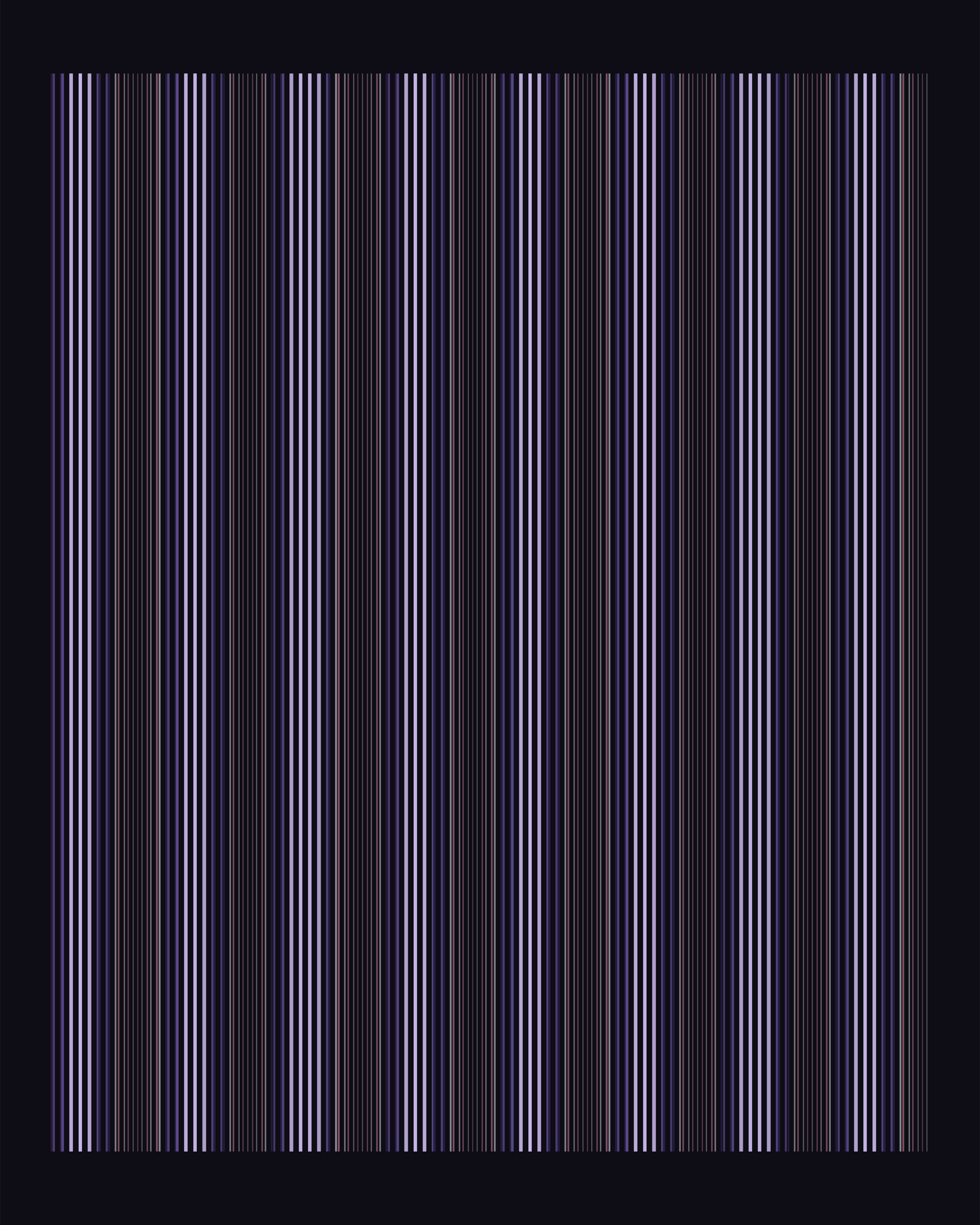
NOMOTION, 2026
Software, market microstructure, dated claims, USDG, one entry toll.
Dimensions variable. Running since 1 July 2026.
The work
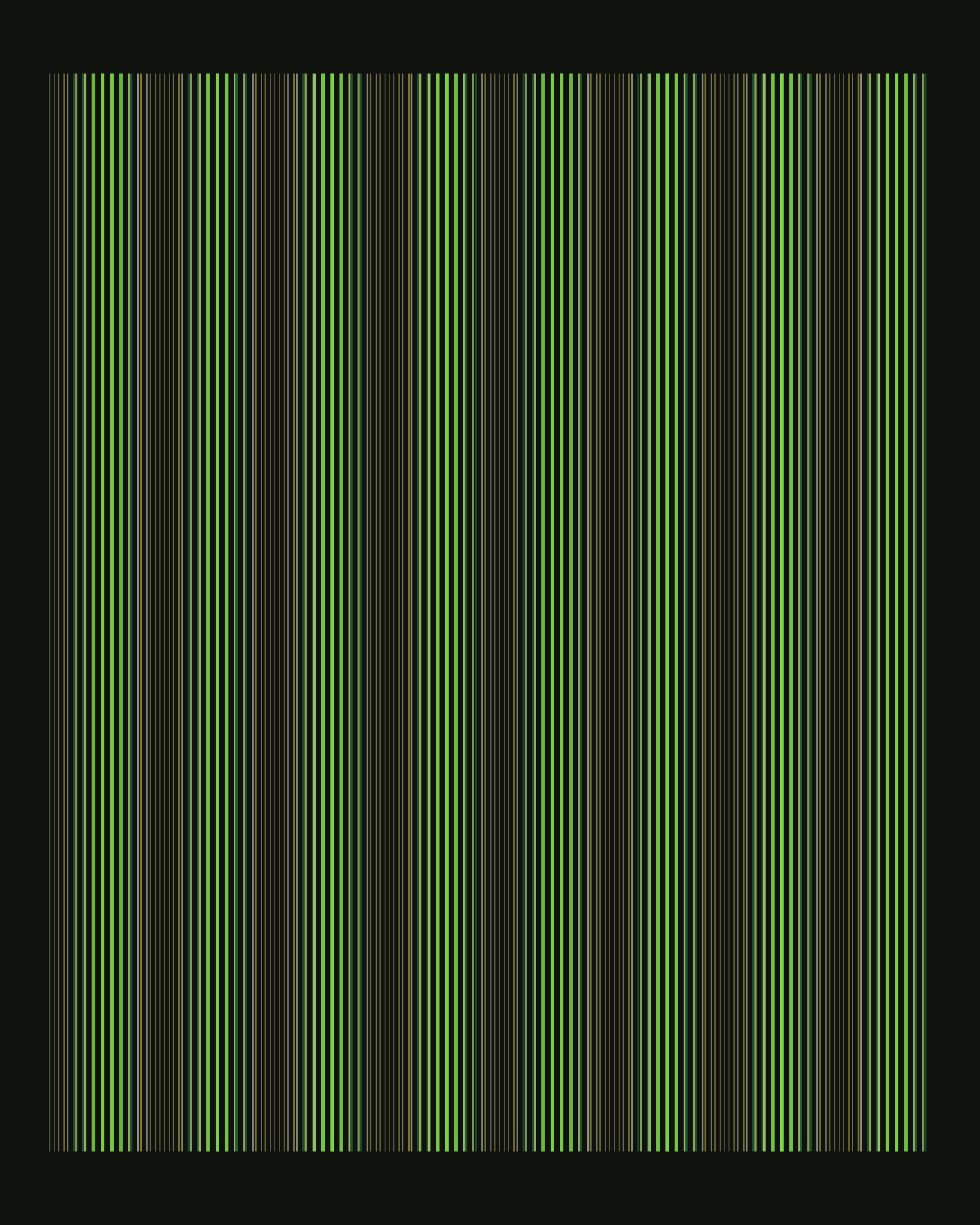
NOMOTION is not a painting that happens to live on a chain. It is a relation made visible: a field of vertical lines whose interference is modulated by live transaction throughput on Robinhood Chain. When the chain is busy the picture dissolves into static; when the chain rests it resolves into bands the eye reads as order. The rarest, most complete state of the work is the one from which the venue earns nothing.
Each block wears one of six hand built palettes, assigned by deterministic seed from its height, and a given block renders exactly the same drawing forever, on any machine. The stills shown here are resolved states: the form the work is collected in. The generator itself has been ported to a dependency free Solidity contract that emits any block as SVG, held to byte equality with the site’s renderer by test fixtures on both sides, so the chain that erases the picture can also custody it.
Editions launch as liquid editions: a bonding curve that graduates into locked liquidity, with a USDG redemption floor funded by trading fees that can only rise, and burn to redeem for the physical print. Burning fixes the exact block of a moment of stillness, and raises the floor for everyone who stayed. Prints are plotted, not printed: pen and ink at 24 by 36 inches or at two metres, one stroke at a time, in the lineage that runs from Nees and Molnar through the plotted generative canon.
How to read it
The lines are all the same length. Only their spacing carries the signal, and that was a correction: an earlier version varied the height of each stroke against a shared baseline, and the result looked exactly like a bar chart, which is the one thing this work is meant to be the opposite of. Height variation reads as data. Spacing variation reads as pattern.
Two frequencies displace the lines against each other. Where they agree the lines bunch into dark bands; where they oppose, the lines spread and the ground opens up. The beat is moiré, the effect Riley and Vasarely built careers on, and the eye reads it as order without being told to.
Measured throughput on the chain is fed into that beat as phase noise. More traffic, more noise, and the bands smear until there is nothing to read. The piece names its own condition in one word, on a single axis from static to still, and coherence is the measure: one minus the activity, so 100 percent is a chain doing nothing at all.
- Still
- Coherence at or above 90 percent. The bands stand clear and every ink is at full strength.
- Resolving
- 70 to 90. The bands are there and their edges have begun to smear.
- Unsettled
- 45 to 70. Neither pattern nor noise.
- Dissolving
- 20 to 45. The bands break and the colour drains back toward the ground.
- Static
- Below 20. No picture. A field.
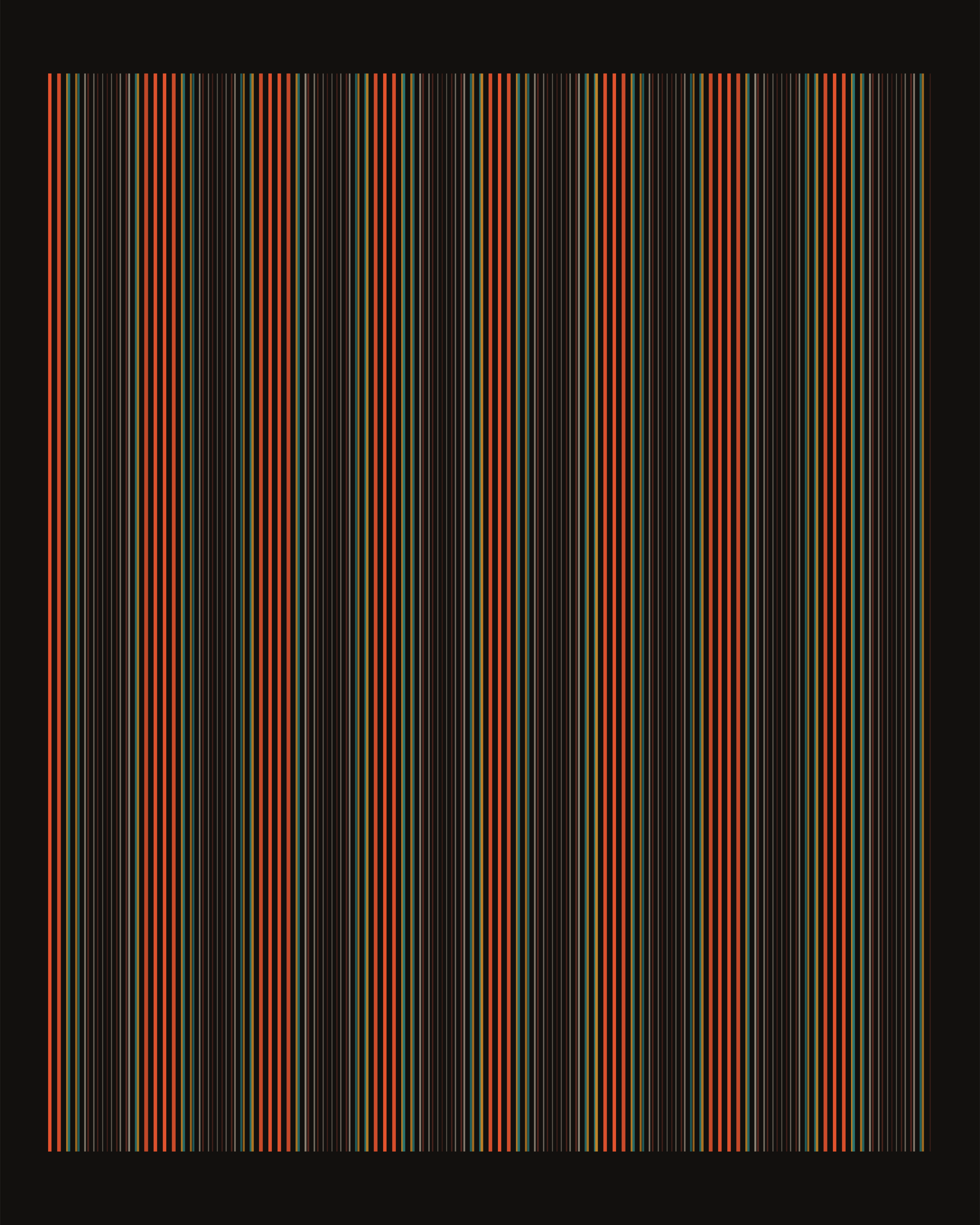
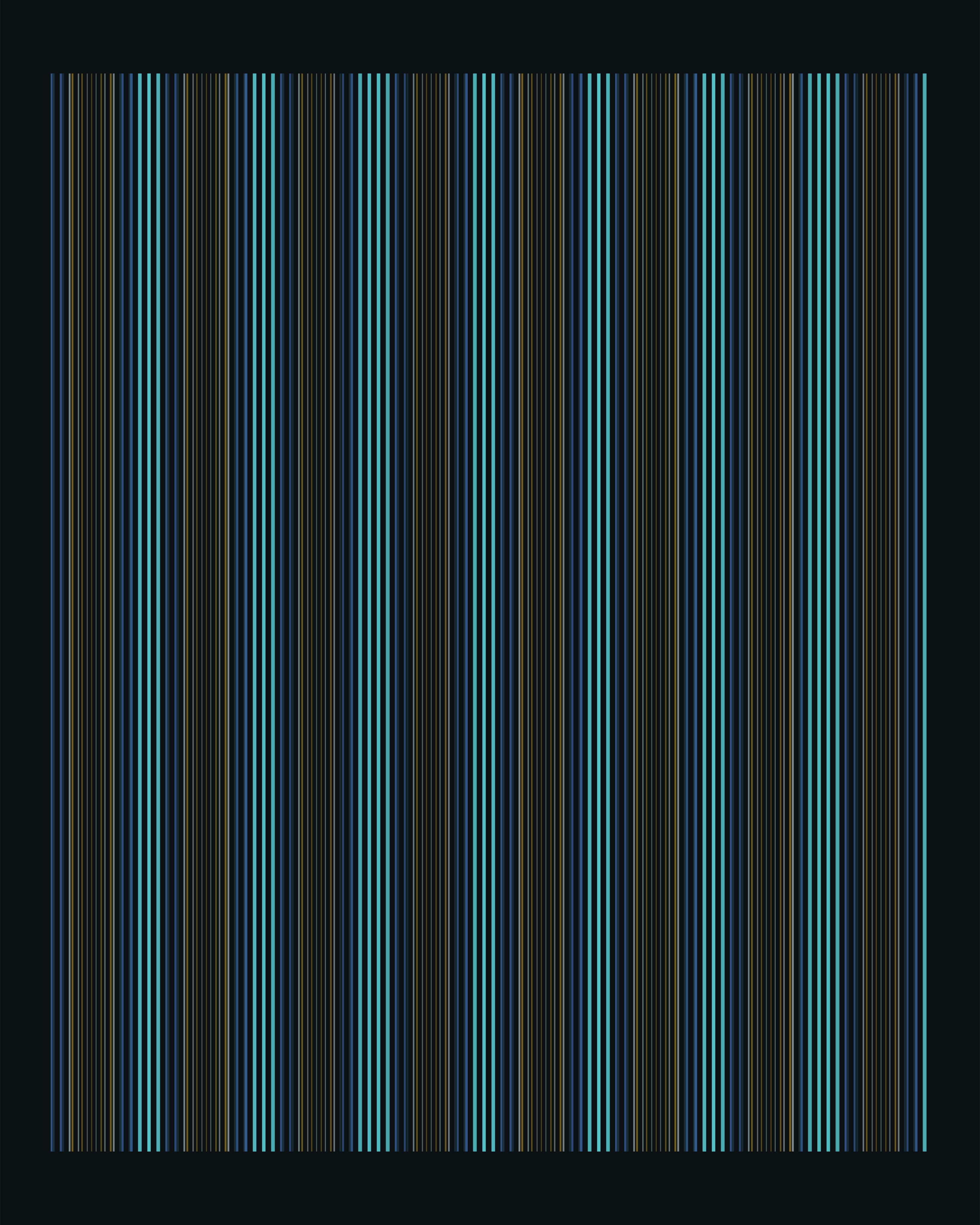
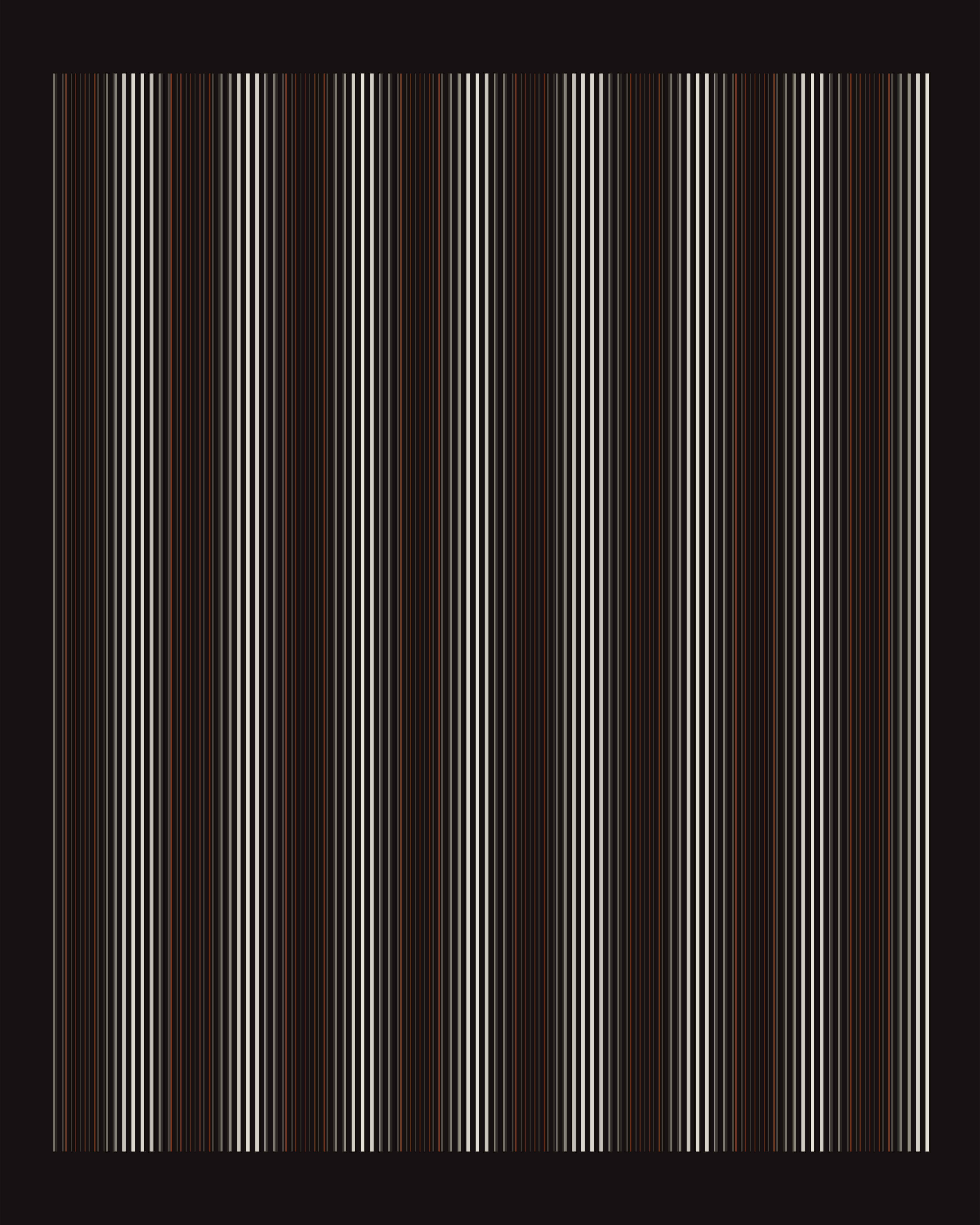
The six plates on this page are drawn at the top of that axis, at complete stillness. That is what the captions mean by resolved, and it is why these are the states the work is collected in rather than the states it spends most of its life in.
The palettes
The first version of this work was a single yellow on near-black, carried across from the instrument that reads the chain without anyone asking whether it belonged. It does not. One accent is the right choice for a readout, where a second hue is noise. It is the wrong choice for a picture, and it is most of why the early renders read as a display rather than as art.
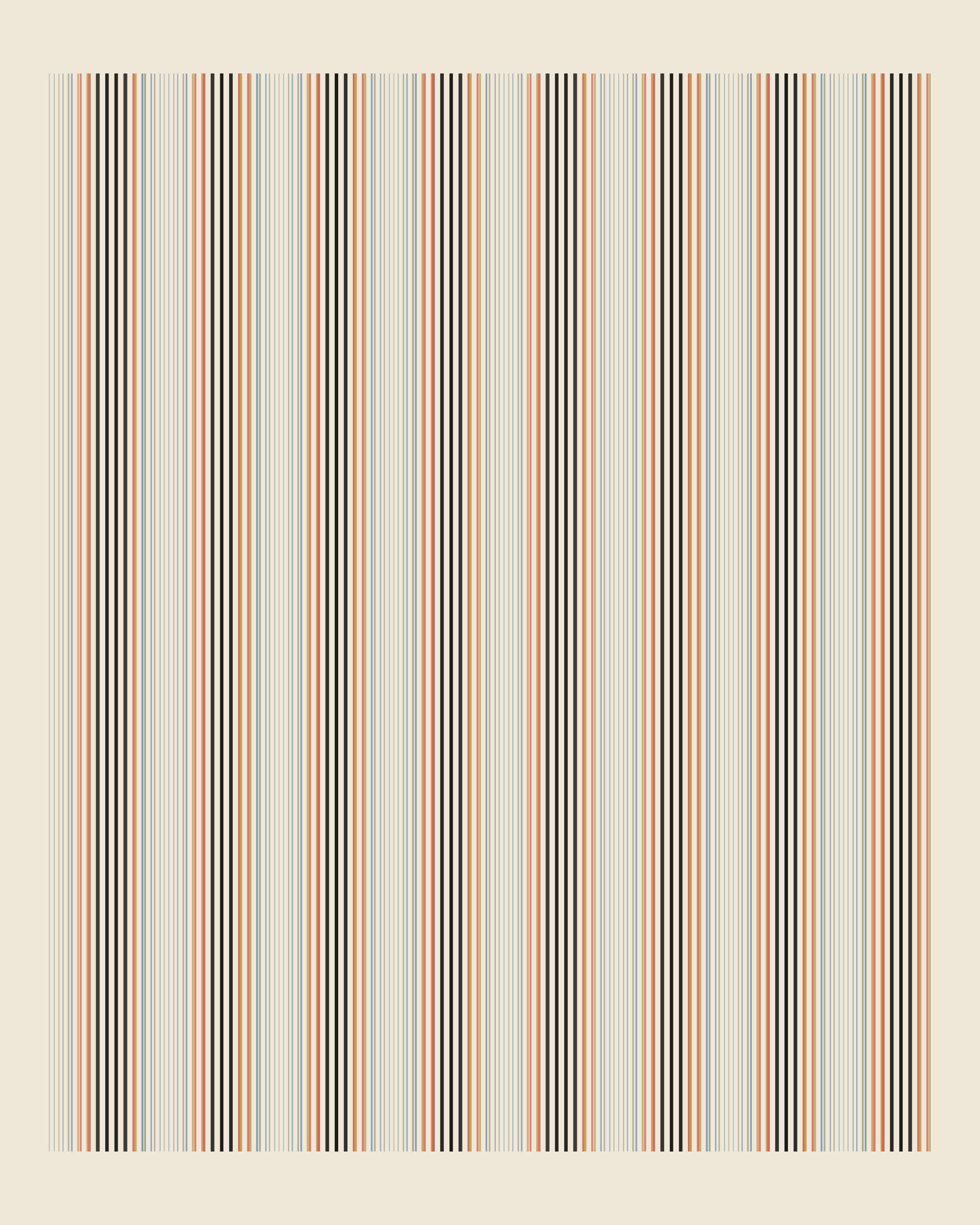
There are now six palettes, five inks on a stated ground, each one chosen by hand. A block is assigned one by an integer hash of its height, so a block has a colour identity as well as a geometry and both are reproducible forever. Five of the six grounds are near black. The sixth is paper, which is the plate below.
Colour is earned rather than applied. Under load every ink is mixed toward the ground, so a busy chain drains the picture toward monochrome and a still one lets the palette bloom. Stillness is what buys colour, which is the same bargain the geometry makes, stated again in hue.
Why the seed is a block
The field is seeded by block height and nothing else. A given block renders exactly the same image forever, on any machine, and that is not a nicety. Burn an edition for the physical print and you get a print of the block you burned at. A print of a block nobody can reproduce is a claim about a moment. A print of a block anyone can re-render is an artefact: hold the two side by side and the claim checks itself.
So the object carries a timestamp of a quiet that cannot recur. The burn destroys nothing against the holders who stayed. It raises their floor, and it fixes the exact height at the moment of stillness. The same block plotted twice is the same drawing and two distinct objects, which is the right way round: the claim stays checkable on any machine, and the object holds what a screen cannot.
The company it keeps
Two lineages run through this and they do not overlap. The conceptual one is older: Kawara’s dated attestations, LeWitt’s idea as a machine that makes the art with execution left to others, Burnham’s systems aesthetics, Ukeles on maintenance as the work itself, Haacke’s ledgers read out of public records and hung on a wall. Klein’s Zones run in reverse, where the burn yields the object and lifts everyone who kept the claim, and Hirst’s forced choice inverted, so that nothing is destroyed against anybody. The work does not cite these ancestors so much as perform their functions with instruments they did not have: a verified source at a pinned address instead of a certificate, custody read from genesis instead of a catalogue raisonné.
The other lineage is retinal, and it is the one a still frame is actually competing with on a wall. What each of them still does better is stated, because a lineage that only flatters the descendant is a press release.
What the work refuses is the consolation the rest of the field runs on. There are no particle swarms, no gradient sublimities and no spectacle measured in gigabytes, because in most data art the data is pigment: it feeds the picture and could feed any picture. Here the relation is structural and adversarial. The venue’s own revenue erases the image, and the aesthetic optimum is the one state that pays nobody.
The condition report
Data driven art has one obvious failure mode: the data becomes an excuse for a weak image. So the question this series has to survive is whether a still frame, with the concept switched off and no explanation attached, is worth looking at. If the answer is no, the concept should be thrown away rather than shipped. This house publishes other venues’ fees and error rates. The same instrument, pointed here, with the unflattering half kept.
What holds
- The restraint. Five near-black grounds and one paper, every ink earned, no particle swarms and no gradient sublime. The image refuses the current failure modes of data art, which is why it can hang in the reductive tradition at all.
- The armature. A picture that appears when the market rests, shown by the venue that profits from its disappearance, with the conflict printed rather than managed.
- The reproducibility. A block renders identically forever on any machine, so every print is a checkable claim about a moment of quiet rather than an artist’s assertion about one.
What it is behind on
- Surface. Martin wins on tremor, Davis on paint body, Riley on shimmer at three metres. A rendered field has no facture, and until a block is plotted at scale the work is a picture of an object rather than an object.
- The masterpiece problem. Determinism means the median block is average, and museums hang selected outliers.
- The signature. Davis had the beat, Martin the tremor, Riley the shimmer, Soto the vibration. This field does not yet have the half second event you recognise across a room, and its central mechanism, the interference, is not yet legible as itself in a still.
Plainly: as a still, today, on a screen, this is strong generative minimalism, honest about its ancestors, carried more by the absence of error than by the presence of an unforgettable pictorial event. As a system, the picture plus the floor plus the venue that earns nothing from its best state, it is more interesting than most of what has been filed under data art this decade. The gap between those two judgments is the work left.
What is unresolved
Four problems, tracked the way this house tracks claims: each one names the evidence that would close it, and none of them can be deleted without producing that evidence. Two have moved since they were written.
What the venue can take
The economics are constants in contracts with no owner and no pause, which is the only version of a guarantee worth stating. Nobody can raise these later, including us.
- Entry fee
- Capped at 1 percent, on buys only
- To the floor
- At least half of every fee, to the edition’s own redemption floor
- Artist’s share
- Up to half of every fee, paid by the pool on every trade, uncapped and worldwide
- Venue’s cut
- Capped at a fifth
- Owner
- None
- Pause
- None
Read the fee schedule against the first paragraph and the series states its own conflict of interest out loud: the toll is collected on motion, and the picture is only whole when there is none. The state worth having is the state the house is paid nothing for.
The rest of it is the fair’s own furniture, rebuilt so that it holds. Each row below names an instrument the art market already promises, then how the market settles it by discretion, then what performs the same job here by constant.
Nothing here is on sale. No token, no mint, no price and no date: the rooms open after counsel and audit, and not before. The terms above are constants in contracts that have not been deployed.
The work also runs live, redrawn as the chain reports, on the instrument that reads it. What that version adds is motion. The lineage, the condition report and the open problems are on this page.
The other rooms are next door, at the vernissage.