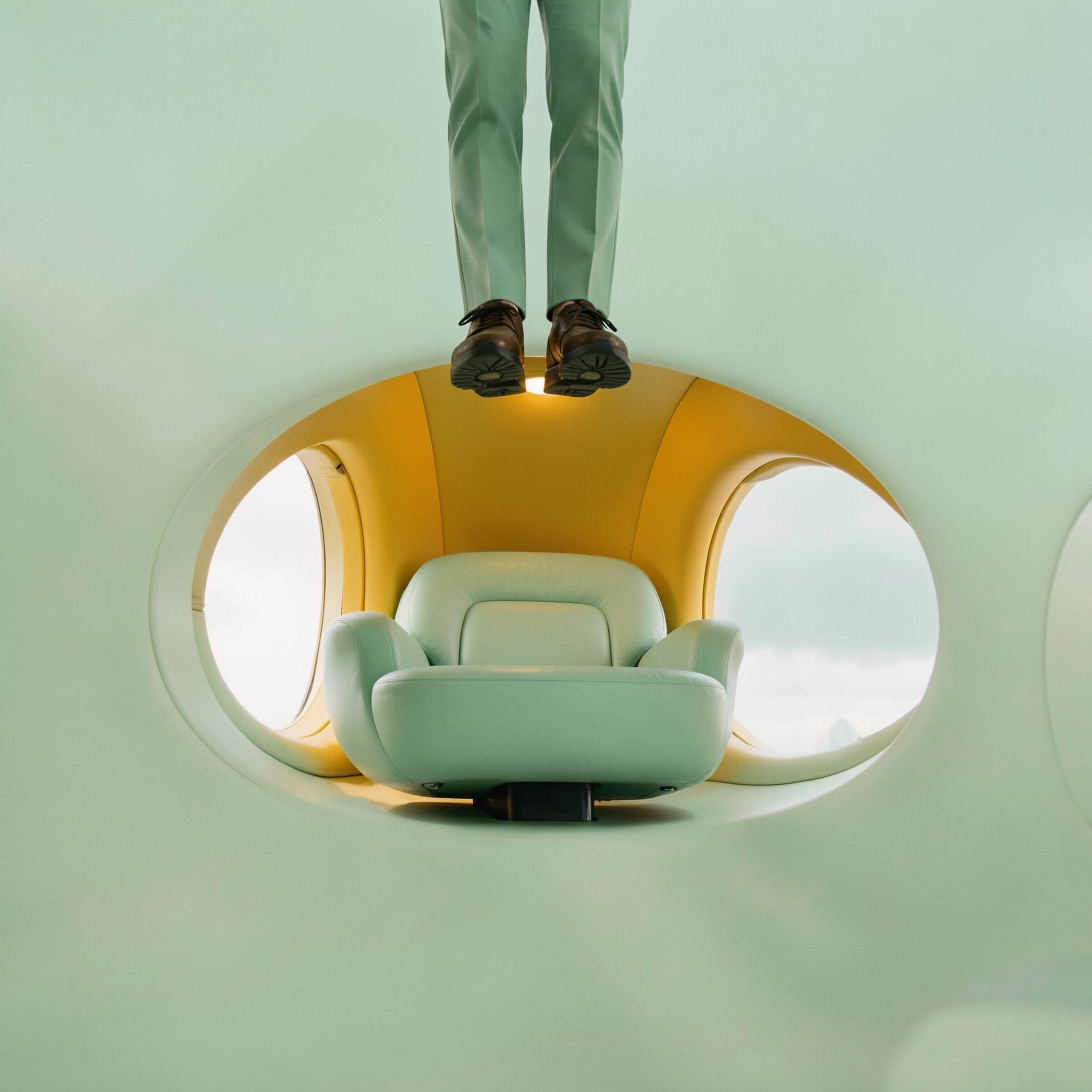
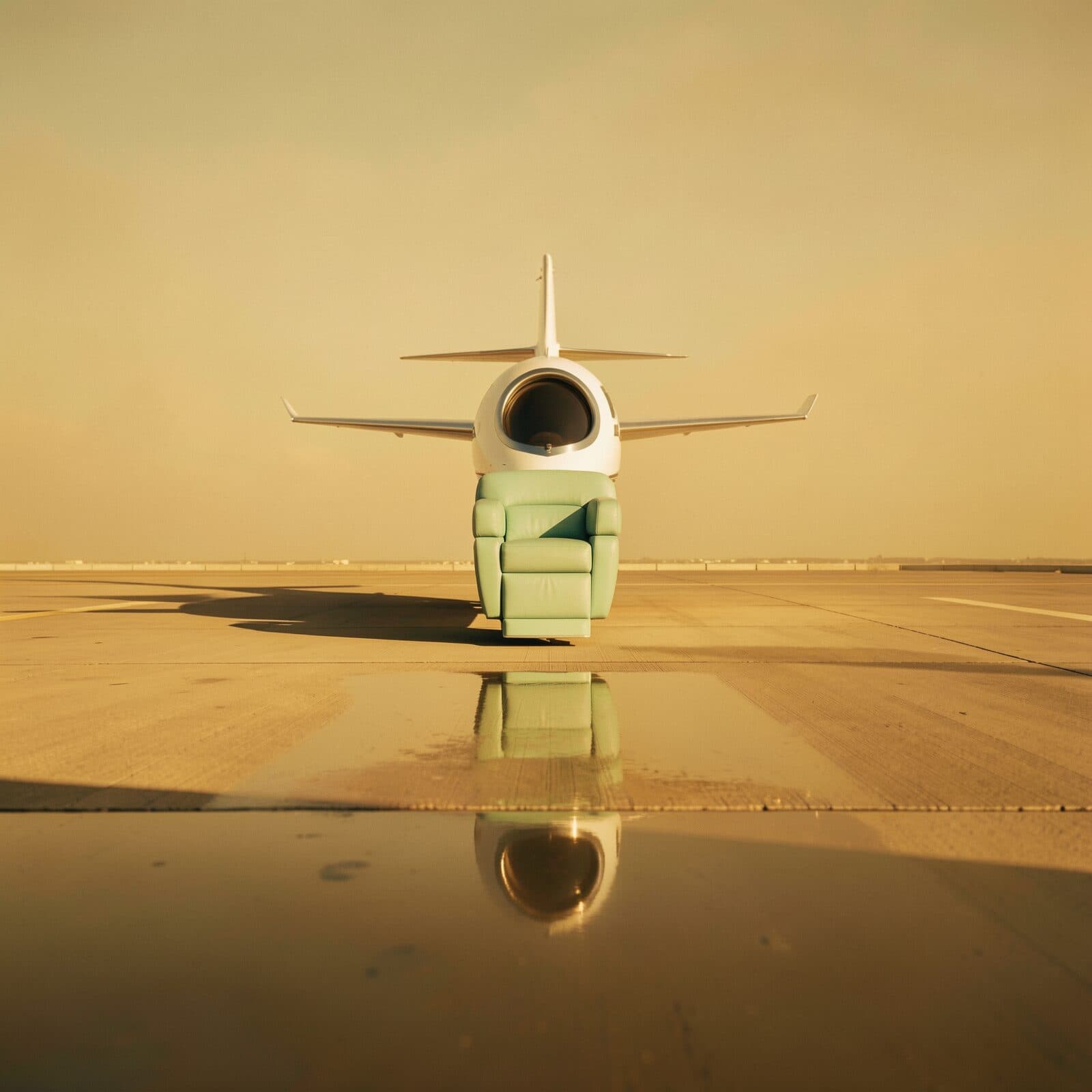
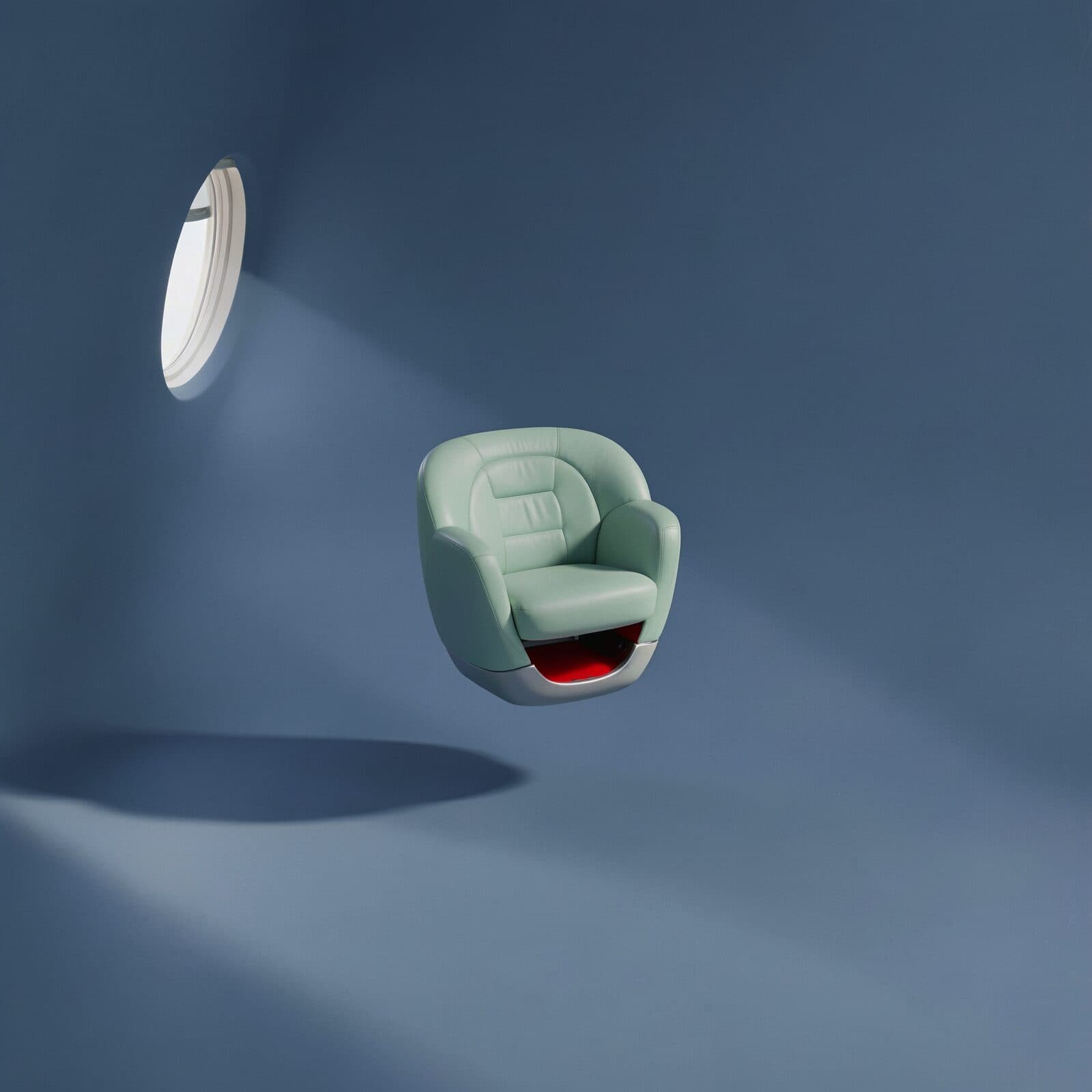
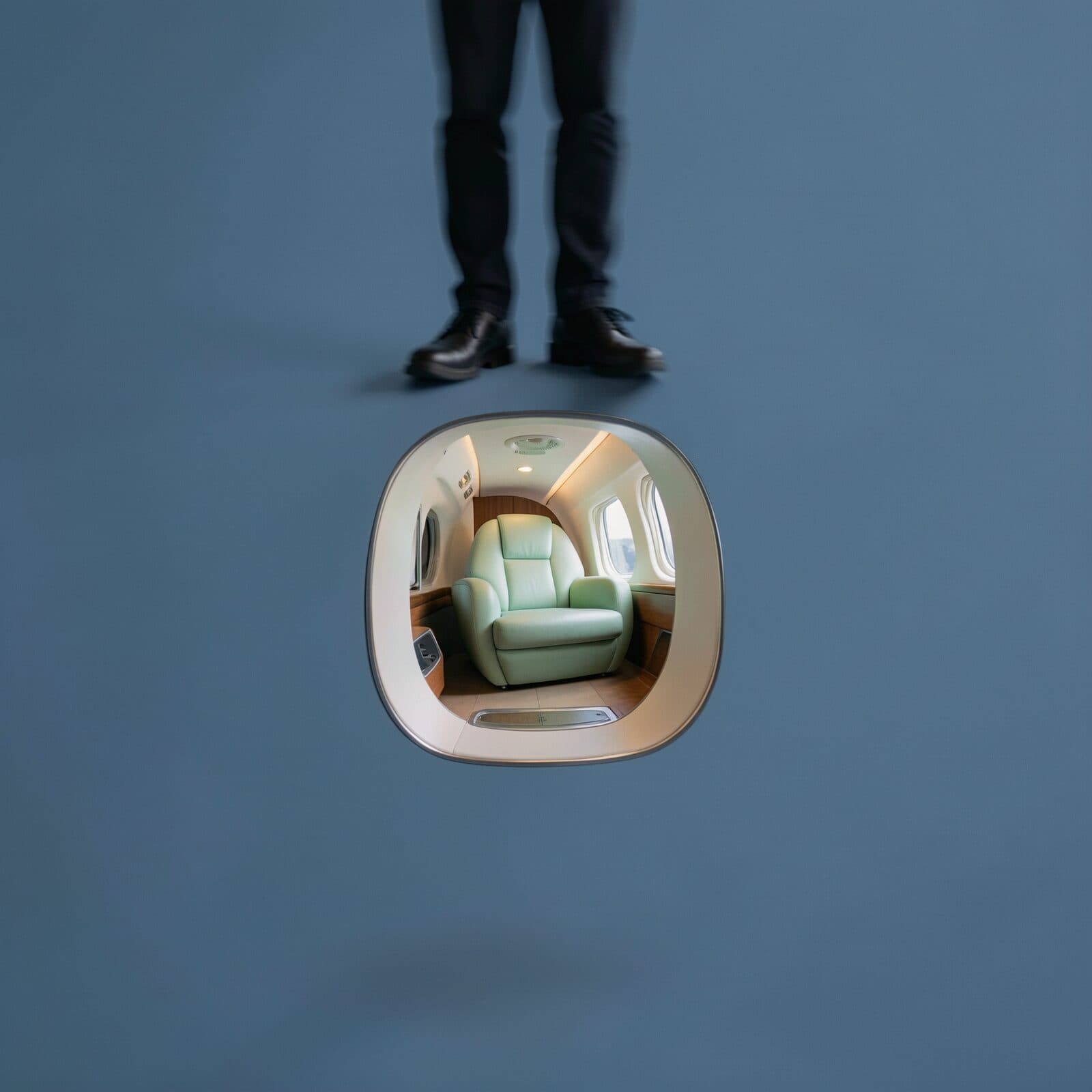
The subject is the quiet absurdity of modern status: comfort that no longer needs a room, luxury that will not stay on the ground, and the wish to take a seat in a place with none to offer. The figures, where there are any, are occupants and witnesses at the same time.
How they are made
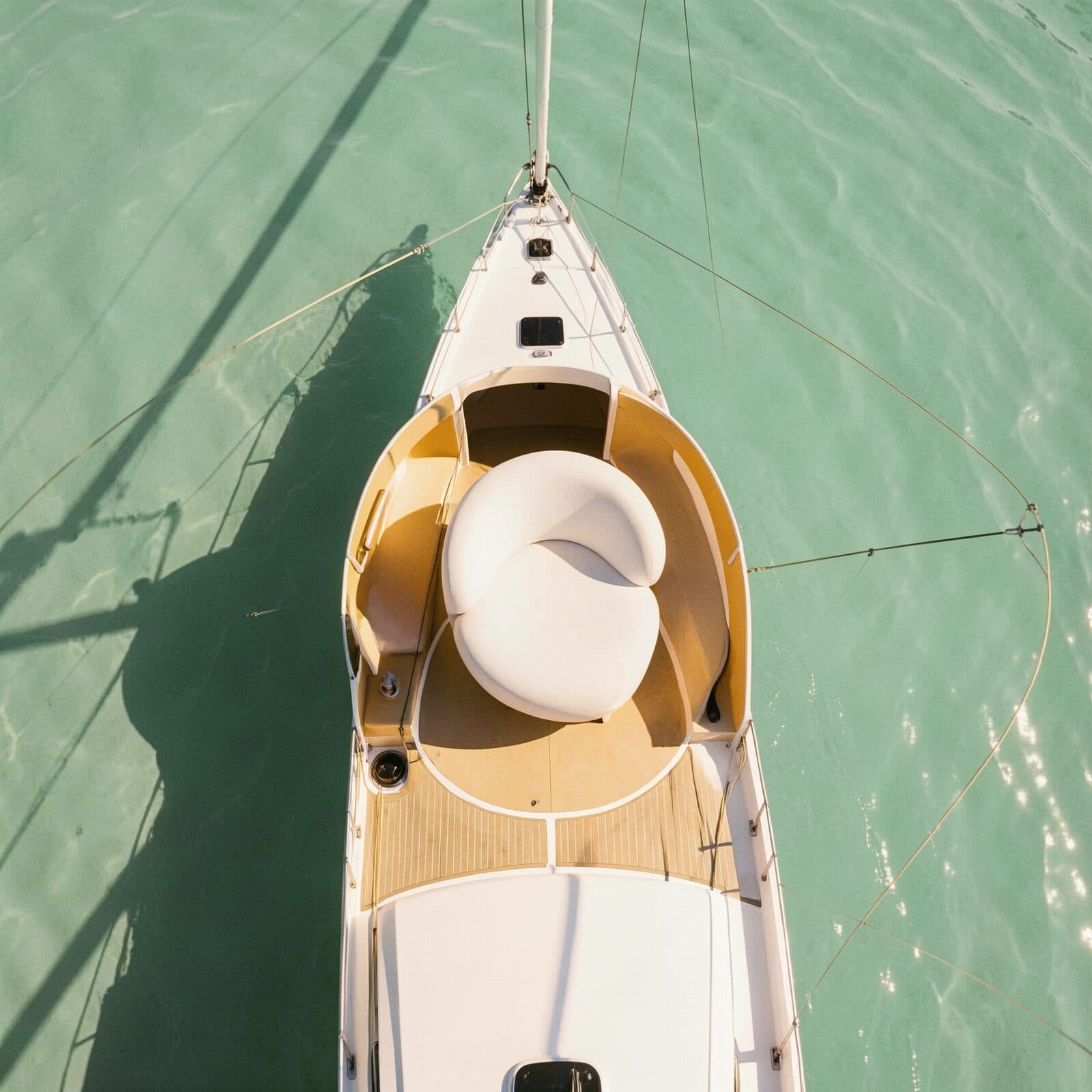
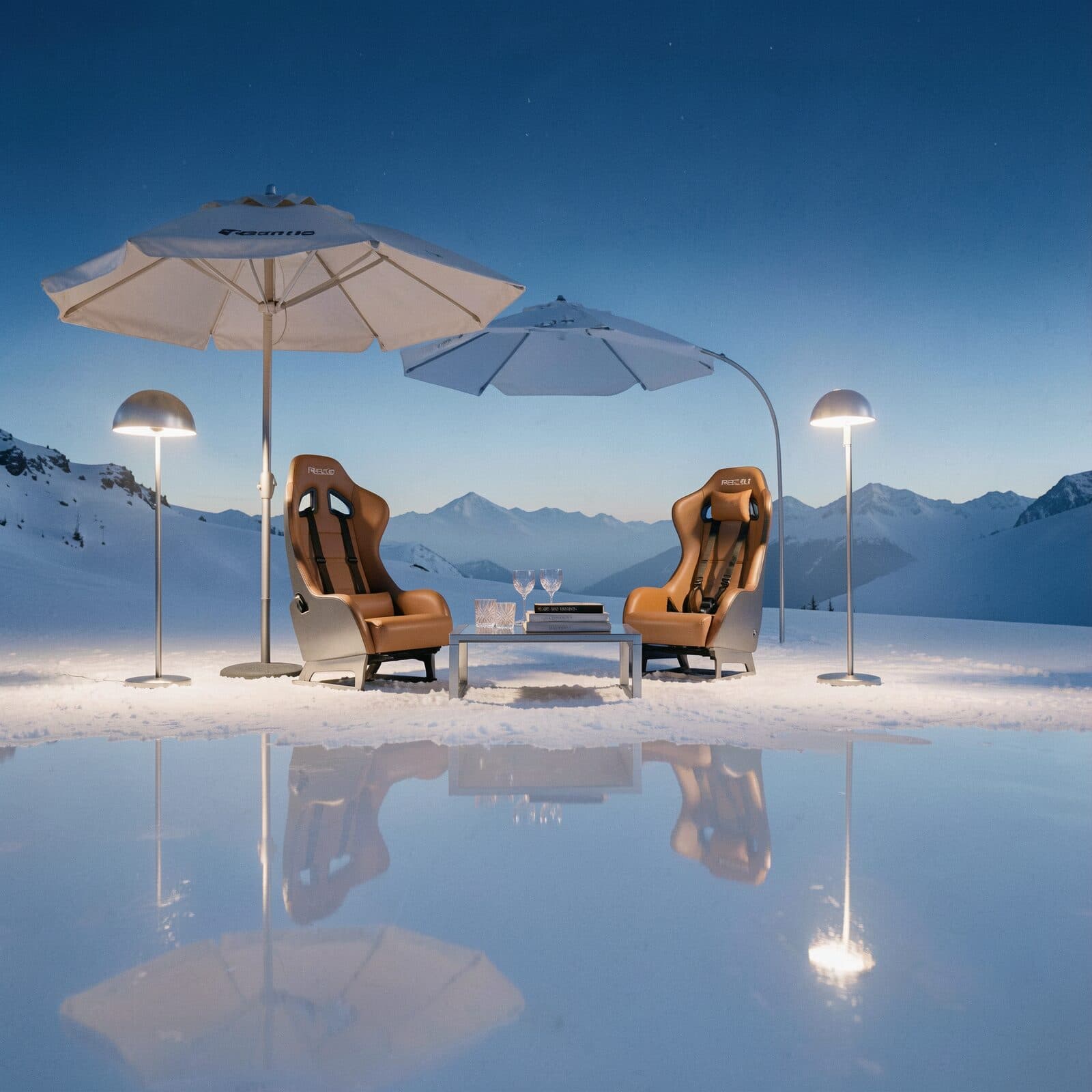
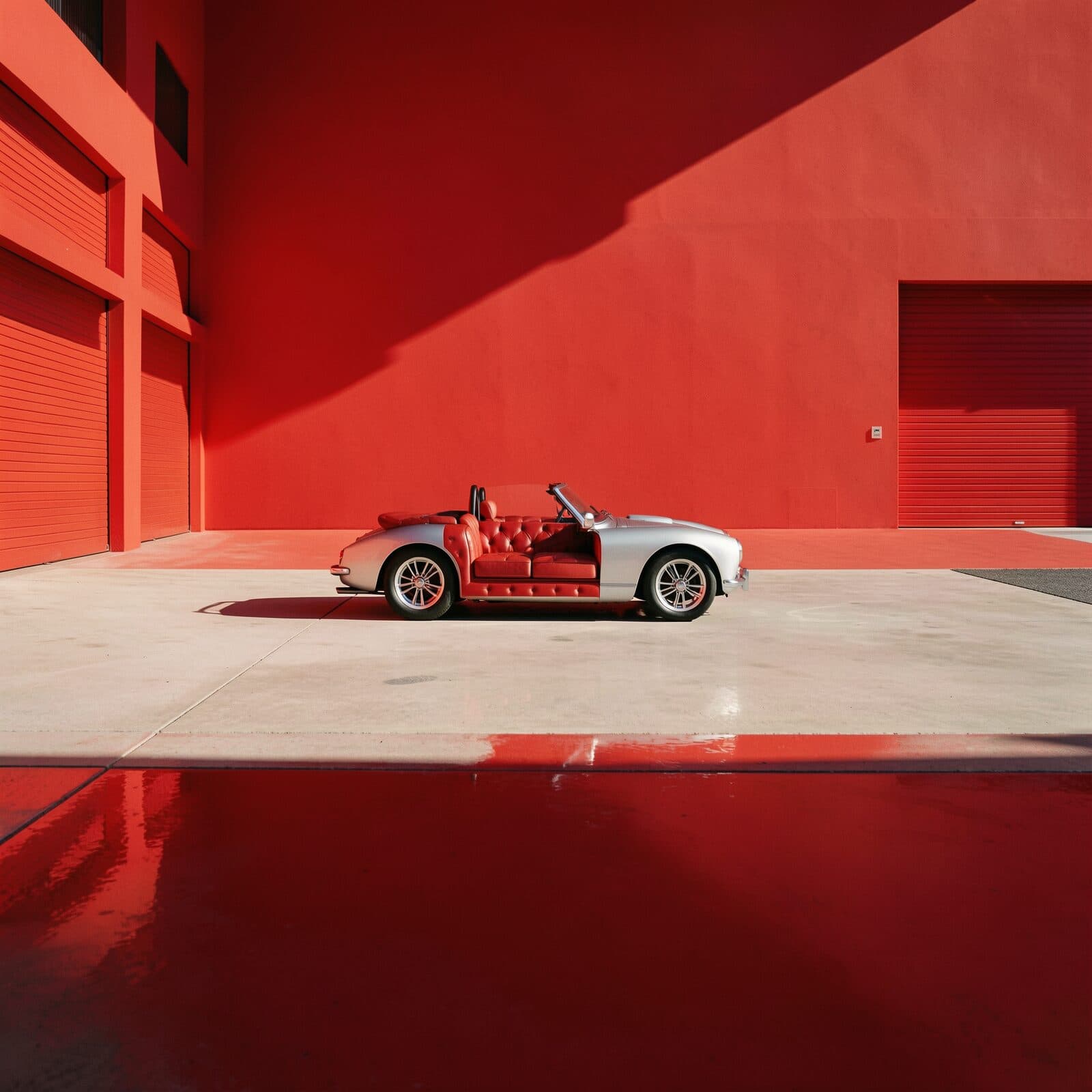
The series began on Midjourney, with eleven words and a flag. The words carried almost none of it. --weird 1500 carried the rest: the legs hanging above the catamaran, the sofa that is also a car, the mirror-flat ice under the 300SL. That parameter is a slot machine. Pull it often enough and something astonishing falls out, and you could not have said in advance what it would be, or asked for it twice.
Midjourney has no API, so the series could not continue there. FLUX has one and no weirdness parameter, and it will not grow one: it renders what you actually say and little else. So the strangeness had to come out of the sampler and be written down. That is worse for discovery and better for a series, which needs the same impossibility to hold across forty frames rather than once.
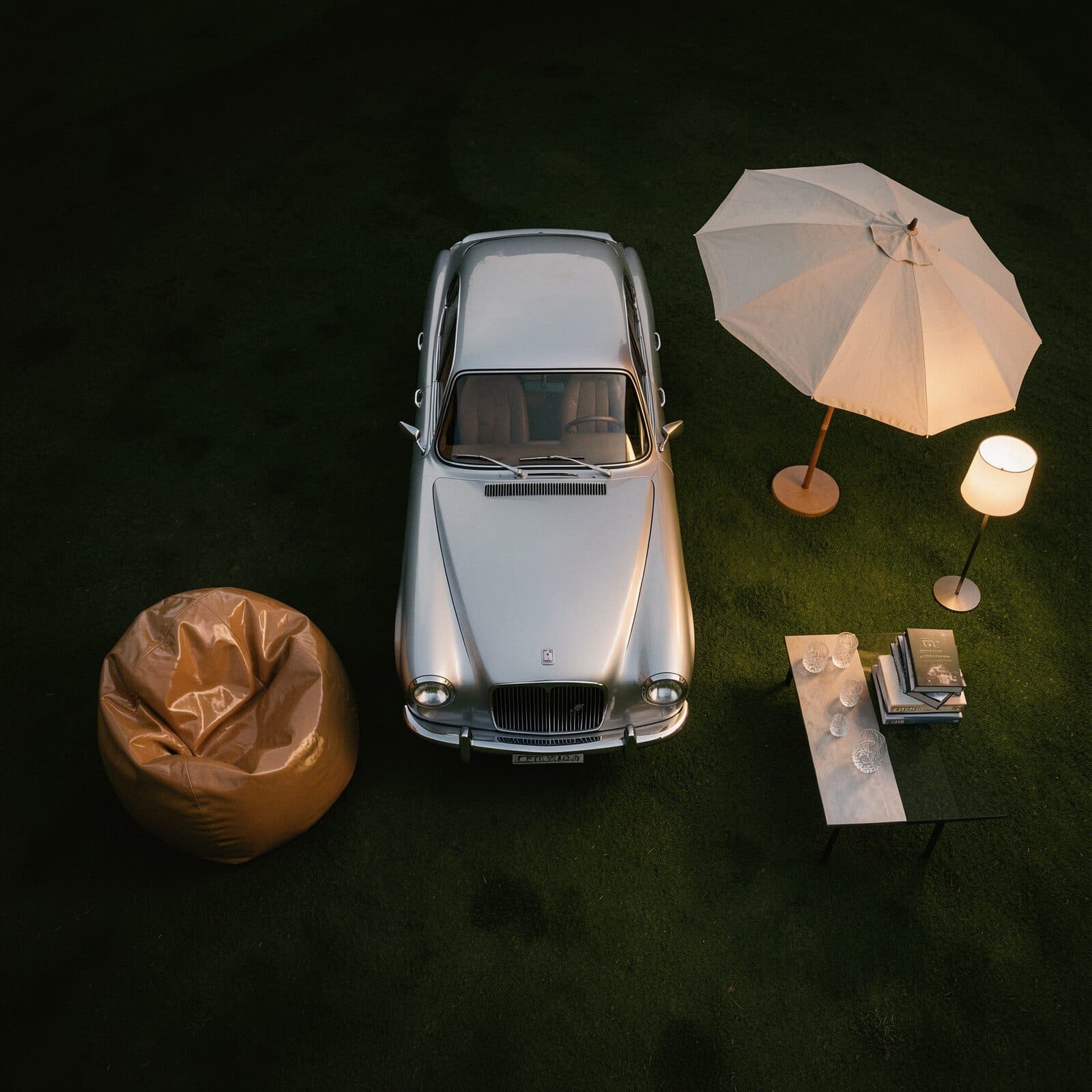
What it was written into is a grammar. Eleven operators, each reverse-engineered from a frame that already existed. Gravity inversion puts the camera under the surface of the water looking up, the figure clear of it, the boat suspended far below at a fraction of the size and obeying a different gravity. Object hybrid makes one thing that is also another, upholstery running without a seam into the frame and fittings of a car. Every operator carries the frame it was read off, the settings it applies to, the operators it refuses to sit beside, and the sentence it writes. Around them: twenty-two settings, twenty-five palettes, eighteen lights, eight ways to compose. The light is chosen before anything else, because it decides whether a picture reads as a photograph or as a render.
The direction is narrower than a genre. Not surrealism, which has a hundred people in it already. Advertising for a world that does not exist, photographed by someone who finds it ordinary. The impossible thing is stated as fact and lit like a catalogue, and nobody in the frame reacts to it. That last part is the whole difference: a figure who registers the strangeness turns the picture into a joke, and the register collapses from advertising into illustration.
Two rules hold it. Never name the strangeness, because a picture that explains itself has stopped being one. And never name a photographer. A device is common property; a specific picture is somebody's, and building theirs here would produce a good imitation instead of this series.
The grammar can now say several million frames. That is the problem rather than the achievement. Generating is not the scarce part and has not been for some time: a frame costs cents, and the engine will make a thousand more by morning, nearly all of them nothing. What a series is worth is what it refused. One of the eleven operators had more attention than any other and never once produced a frame that was kept, so it was taken out, which is the proof that the grammar cannot rule on itself.
Every frame keeps its specification, its model, its seed and the hash of the file it produced. The same grammar, the same seed and the same model make the same frame again. These are not eight lucky accidents nobody can return to.
Editions of twelve. Brushed aluminium, signed and numbered by hand, and twelve is the whole edition: it does not grow later, and there is no second size to make it thirteen.
The rooms of the openings that did happen are next door, at the vernissage.